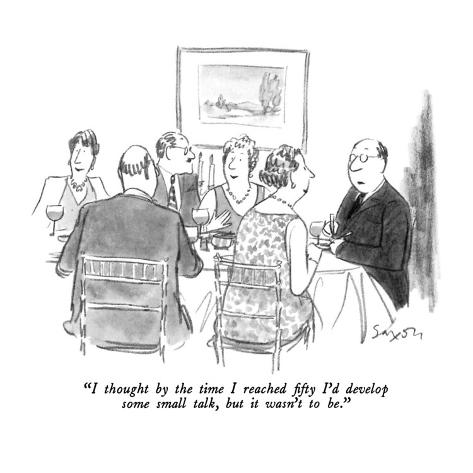
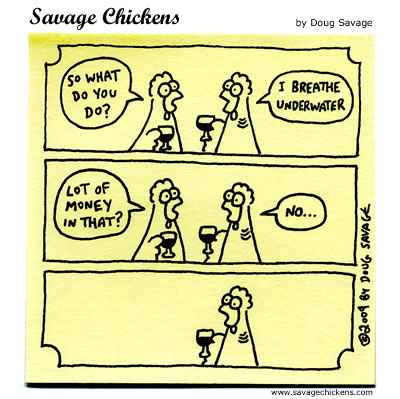
Showing posts with label social anxiety. Show all posts

April 2, 2018

Even on the Sidewalks of NYC

In broad daylight, a person can relax and meditate:


For more on-the-street photography, you can visit Brandon's website,  Humans of New York.

August 14, 2017

Taking Steps to Overcome Chronic Loneliness


There are many studies that look at loneliness and are finding it is increasingly common and associated with serious health problems.  Although social media is designed to connect people (facebook, instagram, twitter, and the like) psychologists and researchers are finding more people are feeling disconnected and lonely than ever.

Cultivating friendships becomes so important as a way to combat loneliness.  Dr. Randy Kamen makes numerous suggestions for making friends, here. I have written about strategies in previous posts, here.

I offer a few of the most often cited suggestions:

1.  Choose a volunteer activity.  One that helps a needy population or is helping solve a societal problem that concerns you will likely be most beneficial to you.  Engaging in meaningful work, whether a paid job or volunteer work, can help ease feelings of loneliness and increase feelings of positive well being.

2.  Explore support groups.  Support groups are usually led by volunteers, typically someone who has benefited from several years of experience in the support group arena. One support group I often refer to is Recovery International (formerly Recovery, Inc.).  This group helps it's members with skills to overcome anxiety, depression, and loneliness. You can email the contact person for the Austin, TX area, here.  I talk in more detail about this support group in an earlier post, here.

3.  Participate in group therapy.  Here in Austin, TX we have The Austin Group Psychotherapy Society which provides a convenient website that lists many group therapy opportunities available in the Austin area.  Click here to see the list and description of group therapy experiences available. For readers in other parts of the country, try contacting a licensed psychologist in your nearest city and ask for referrals to group therapy providers. Group therapy is lead by paid professionals.  I strongly recommend a professional who is licensed with a mental health certification in your state (licensed psychologist, clinical social worker, marriage and family therapist, etc.)

People who feel lonely sometimes are people who have struggled with shyness for most of their lives.  Many report feeling awkward in social interactions, feeling unable to converse in a way that helps them connect with others or in a way gains them reciprocal interest.  Group therapy, support group participation, and other types of settings which promote conversation between people (MeetUps for example) is one avenue to observe and practice the art of talking to people in a way that garners friendships.  Practice may not make perfect but it certainly can help shy and lonely people reach out more effectively.

Sandy Andrews, PhD Psychologist Specializing in CBT
South Austin, TX 


March 21, 2016

Good Conversation Means Good Listening


As a psychologist who treats socially anxious patients with CBT, one of the behavioral skills I put in the treatment plan is meeting new people.  Or, getting closer to someone we kind of know but don't know well enough to invite for an outing.  How do we go from meeting someone new at a BBQ or from a conversation at the copy machine or from chatting on Google hangouts to the point where we can call that person a friend?

In a word: conversation.  Or more accurately, listening, according to Celeste Headlee in her TED Talk: 10 ways to have a better conversation.

Don't have the time to watch her 12 minute talk?  You can read her full transcript, here.

Or, in an even bigger hurry?  I've listed her ten rules of thumb for better conversation below:

1. Attend.  Give your full attention.  Don't multitask.  Look in their eyes, not at your watch or that cute boy who walked by.  And absolutely, do not glance at your cell phone.  If your text notification goes off?  Unless it's from your mother's surgeon, ignore.  Better yet, say excuse me while I mute this.  I want to hear what you're saying.   

2. Set yourself aside, in the words of Road Less Traveled author Dr. Scott Peck. Don't pontificate. Don't lecture. Refrain from sharing your opinion (no matter how well researched it is).  Assume you have something to learn. In Celeste's words, Everyone is an expert in something.

3. Use open-ended questions, like journalists do.  Start your questions with Who, What, When, Where, Why or How. (Here I will violate Rule #2 and interject my well researched opinion:  skip the Why questions:  They tend to sound accusing or judgmental.)  Try asking your new acquaintance, "What was that like?" "How did that feel?" "So what did you think at that point?"  "How did you know to do that?"

4. Go with the flow. When an opinion or reply comes into your mind, ignore and listen for a little bit longer. Stay focused on their story.

5. If you don't know, say that you don't know. We all like to be the expert on something.  And so does the person you are trying to friend.

6. Assume their story is unique.  Because it is.  How they felt when their favorite sports team won the tournament is not the same as how you felt when your team won. In Celeste's words,  Don't equate your experience with theirs.

7. Try not to repeat yourself. Don't be boring. Resist the impulse to say, for the third time, that witty remark you made to your cubicle neighbor.

8. Keep to the basic plot of your story.  Stay out of the weeds. You don't need to remember the specific dates, names, street names of that excellent Taco house you like to visit.  Your listener cares about you and how you felt.

9.  Listen. As Epictetus said, “We have two ears and one mouth." Use them accordingly. Who is Epictetus?  It doesn't matter. (Refer to Rule #8).

10. Be brief.

And with that?  I will briefly end this post.


Sandy Andrews, PhD  is a Clinical Psychologist / Therapist who provides CBT in Austin, Texas  

July 31, 2015

Social Anxiety and Alcohol Abuse


I just listened to NPR's Fresh Air interview with Sarah Hepola, author of the memoir titled,  Blackout: Remembering the Things I Drank to Forget. If you drink to be a more bold, brash, funnier, or sexier you, in other words, to quell social anxiety, then this could be a listen that helps you swerve off of the road to addiction (or a read that helps, but I haven't read the book yet so I can't recommend it).  Important fact:  Blackout refers to memory lapses due to excessive drinking.  It does not mean passed out or unconscious.  If your friend tells you how funny you were last night but you don't remember?  You might have experienced a blackout. Unhealthy, yes.  Dangerous? Could be.

Click here to listen to Fresh Air's Terry Gross interview the author.

--Sandy Andrews, PhD 
Clinical Psychologist
Austin, TX 

August 20, 2014

Small Talk Tips from TED

You receive an invitation to a party.  Great, right?  That is, if you're an extrovert.  However, if you're a gregarious introvert, suffer from social anxiety, or are just plain shy, a party invitation does not feel great.  It can feel debilitating.  

As if on cue, you develop a common cognitive error, a case of the dreaded What Ifs:

What if I'm left standing by myself and nobody will talk to me?  
What if someone starts a conversation and I'm tongue-tied? 
What if I try to interject myself into a conversation but they ignore me? 


While there are no guarantees, most socially anxious people catastrophize:  They imagine the worst before attending a gathering of any size, even more so when the only person they expect to know at the party is the person having the party.  And most people find, after attending the party, that it wasn't nearly as bad as they expected.  That, in fact, people did start conversations with them.  That they they did, in fact, come up with decent replies.  And that when they approached a group of people already talking, they were politely welcomed into the conversation.

Still, it helps to review some basic guidelines about small talk.  To boost your confidence.  To improve your end of the conversation.  What is the best way to start a conversation with an unknown person?  How does one reply to a stranger's ice breaker in a way that avoids the awkward silences?  

The good people at Ideas.TED.com,  Chris Colin and Rob Baedeker, have come to our rescue with three pointers.  

1.  Ask open-ended questions that invite stories, not short replies:
      How do you know Sharon? 
      How did you get into the accounting field?
      What has college been like for you so far? 

2.  Avoid the common pitfall of answering their question by mirroring the question and instead turn their question into an opportunity to get them talking more: 

Isn't this heat awful?  

Instead of:                                                        You can say:  
Yes, this heat is terrible.  I hate it.                        Yes. It's times like these I wish I lived in                                                                                                        Minnesota.  Have you ever lived in a cold                                                                                                    climate?"  

This is a great building, isn't it? 

Instead of:                                                          You can say:  
Yes, it's beautiful.                                                  Yes it is. What do you know about this house? 

Have you known Greg and Julie for very long?

Instead of:                                                           You can say:  
Not really. I met them at work.                               I know them from work.  What about you?                                                                                                   How did you meet them? 

3.  Give an unexpected response.  Something slightly offbeat that will lead the person to become more interested in what you say next.    

Instead of:                                                          You can say:  
Yes it is. We really needed it.                                I was ready for it. My goggles and life jacket                                                                                                are all set to go.
What are you studying at the university? 

Instead of:                                                          You can say:  
I'm a history major.                                               I'm majoring in student loan debt with a                                                                                                          minor in hope I get a decent job. 

You can learn that you are not alone by reading what others have to say about their own social anxiety, here. But by all means, read up on more suggestions for improving small talk here and here and here. Read the  suggestions of others, practice them, and RSVP a confident yes to the next party invite.

-Sandy Andrews, Ph.D.
CBT Cognitive Behavioral Psychologist 
Austin, Texas

July 27, 2014

Fake It Til You Make It: The Power of Body Language

Nervous about an upcoming job interview? Wanting to invite a new friend for coffee but feeling too shy to do so? This video of Harvard researcher and social psychologist, Dr. Amy Cuddy, is a bit long but well worth watching.  Based on research findings, Dr. Cuddy offers a few short and simple exercises designed to help boost confidence in school, work and social settings.  These are examples of behavioral tools recommended frequently in CBT psychologist offices.


-Sandy Andrews, Ph.D.
CBT Cognitive Behavioral Psychologist 
Austin, TX

July 3, 2012

Coping with Social Anxiety

When we work with social anxiety, one of the most widespread forms, we learn that meeting new people is a highly distressing task.

Introducing oneself, starting up a conversation, keeping small talk going, indeed, merely showing up, any or all of these scenarios evoke considerable anxiety for socially anxious people.

Cognitive therapy explores negative thought patterns that increase anxiety and lead one to shy away from talking to someone new or starting a conversation with an acquaintance.

A very typical dysfunctional thought pattern or cognitive distortion that plagues people with social anxiety is mind reading:  assuming we know what the other person is thinking and, more important, assuming those thoughts are negative; that they are negatively judging us.

At least two broad options are encouraged as a counter to mind reading.  The first is to decide to stop mind reading --  to instead tell ourselves that mind reading is futile, probably inaccurate, that we are unlikely to ever get the real truth.  In other words, our assumptions about the other person's thoughts will never be truly verified.  Because of this, it is an act of folly to mind read and base our own behavior on those assumptions.

How do we stop?  Distract ourselves with another subject altogether.  The weather.  The food selection.  Reciting the alphabet backwards.  The baseball game you're looking forward to watching.  Whatever comes to mind that lets you think of something besides mind reading.

The second option we have is to replace negative mind reading with something more positive and probably more accurate. Assume that the other person is interested in getting to know us, is also feeling anxious about starting a new conversation, and would welcome our small talk.  We are, as a rule, social beings who want to get to know people.  Somebody needs to break the ice and it might as well be me.


So that backyard barbeque you've been dreading?  Go.  But first?  Take a few deep breaths followed by long exhales.  Loosen up those smile muscles.  Brush up on some small talk pointers.  Decide to introduce yourself to at least one new person.  Choose someone who is standing alone or otherwise not engaged in conversation. Hi, I'm Susan usually works great.  Followed by, I know Dave and Karen (the hosts) through work.  How about you?  

If they don't help the conversation along, decide to give it a try.  It doesn't hurt to practice in your head before you go or before you approach a particular person.  (Cognitive behaviorists call this covert rehearsal.)

Ask how long they've known the host.  Comment on the weather.  Or the food.  The rule of thumb with small talk is this:  Start with the general and move on to more personal topics but only if the person seems interested.

Second rule?  Ask them a general question about something you have in common.  What do you have in common with this stranger at a barbeque, you ask?  Well for one, you are both at the same barbeque.  You were both invited by the same host.  You are both standing in the heat, or under the shade tree, or inside the air conditioning, or in line at the bathroom.  You are both listening to the same music, can see the same television, are surrounded by the same paintings on the wall.  Move from the general (even boring) to the more personal once you see the person is willing to converse.

Examples of starters:

How long have you known _______ (the host)?
It looks like you're drinking the iced tea.  Is it sweetened?  
Do your kids go to school together?
Have you lived in this neighborhood long?
What kind of dressing was on that salad?  Did you taste it?

If you are not getting much of a response after one or two starters, allow silence.  Maybe that will prompt them to say something.  If not?  Wait a little longer and then excuse yourself with a smile, I'm going to get something to eat now.  Nice to meet you.  And away you go.

Even if the attempt didn't go very far you can pat yourself on the back for trying.  For getting in some practice.  For concluding it wasn't all that bad.  And maybe deciding to give it another try.  The next person is bound to be more social.

October 8, 2010

Getting the Sleep You Need: Tips for a Better Night's Rest


Getting a good night's sleep is an integral part of mental health. When we get too few hours of sleep or wake up feeling as though we haven't had enough rest, especially on a regular basis, our emotional and physical wellbeing can suffer dramatically.  Too many sleep deprived nights and we are at risk for depression, panic disorder, and persistent insomnia, to name a few long term problems.  Below are many changes and sleep hygiene tips often recommended to those struggling to get to sleep.

TIPS FOR BETTER DAYTIME HABITS

Do not nap during the day - you will throw off your body clock and make it even more difficult to sleep at night. If you are feeling especially tired, and feel as if you absolutely must nap, be sure to sleep for less than 30 minutes, early in the day.

Limit caffeine, alcohol and nicotine. Avoid drinking caffeine or alcoholic beverages for several hours before bedtime. Although alcohol may initially act as a sedative, it can interrupt normal sleep patterns. Nicotine is a stimulant and can make it difficult to fall asleep and stay asleep. Many over-the-counter and prescription drugs disrupt sleep, especially decongestants (examples: Sudafed, phenylpropanolamine).

Expose yourself to bright light/sunlight soon after awakening. This will help to regulate your body's natural biological clock. Likewise, try to keep your bedroom dark while you are sleeping so that the light will not interfere with your rest.

Exercise early in the day. Twenty to thirty minutes of exercise every day can help you sleep, but be sure to exercise in the morning or afternoon. Exercise stimulates the body and aerobic activity before bedtime may make falling asleep more difficult.

Check your iron level. Iron deficient women tend to have more problems sleeping, so if your blood is iron poor, a supplement might help your health and your ability to sleep.

TIPS FOR A BETTER PLACE TO SLEEP

Keep your bedroom peaceful and comfortable. Make sure your room is well ventilated and the temperature consistent. And try to keep it quiet. You could use a fan or a "white noise" machine to help block outside noises.

Your bed. Make sure your bed is large enough, and comfortable. If you are disturbed by a restless bedmate, switch to a queen- or king-size bed. Test different types of mattresses. Try therapeutic shaped foam pillows that cradle your neck or extra pillows that help you sleep on your side. Get comfortable cotton sheets.

Your bedroom. Make your bedroom primarily a place for sleeping. It is not a good idea to use your bed for paying bills, doing work, watching tv, etc. Help your body recognize that this is a place for rest or intimacy.

Your clock. Hide it. A big, illuminated digital clock may lead you to watch the time. You end up feeling stressed and anxious worrying about how many hours sleep you will, or will not, get. Place your clock so you can't see the time when you are in bed.

TIPS FOR A BETTER PRE-SLEEP RITUAL

Keep a regular schedule. Try to go to bed and wake up at the same time everyday, even on the weekends. This will help your body expect sleep at the same time each day. Don’t oversleep to make up for a poor night’s sleep – doing that for even a couple of days can reset your body clock and make it hard for you to get to sleep at night.

Turn down the lighting in the evening. The closer you are to bedtime, avoid bright or blinking lights. Late night internet browsing is a big cause of insomnia. If you must use the computer at night, turn down the contrast button on your monitor. The television and video games are other sources of blinking lights that disrupt your body's ability to move toward sleep mode.

Relax for a while before going to bed. Spending quiet time can make falling asleep easier. This may include meditation, relaxation and/or breathing exercises, or taking a warm bath. Try listening to recorded relaxation or guided imagery programs.

Incorporate bedtime rituals. Establish a routine. Turn down the lights, listen to soft music, sip a cup of herbal tea (caffeine free), put on PJ's, brush teeth, wash face, etc., A routine cues your body that it's time to slow down and begin to prepare for sleep.

Don’t eat a large, heavy meal before bed. This can cause indigestion and interfere with your normal sleep cycle. Try to eat your dinner at least two hours before bedtime.

Light bedtime snacks can help. An amino acid called tryptophan, found in milk, turkey, and peanuts, helps the brain produce serotonin, a chemical that helps you relax. Try drinking warm milk or eating a slice of toast with peanut butter or a bowl of cereal before bedtime. Plus, the warmth of the food may temporarily increase your body temperature and the subsequent drop may hasten sleep. Light carbohydrates can help. Crackers in bed, anyone?

Jot down your concerns and worries. Anxiety excites the nervous system, so your brain sends messages to the adrenal glands, making you more alert. Write down your worries and possible solutions before you go to bed, so you don't need to ruminate in the middle of the night. A journal or "to do" list may be very helpful in letting you put away these concerns until the next day when you are fresh.

Go to sleep when you are sleepy. When you feel tired, go to bed.

Avoid "over-the-counter" medication sleep aids, and make sure that your prescribed medications do not cause insomnia. Over-the-counter "sleep aids" can be effective in the short term but can lead to long term, harder to treat cases of insomnia. In some cases, there are safety concerns. Antihistamine sleep aids, in particular, have a long duration of action and can cause daytime drowsiness. Always talk to your doctor or healthcare practitioner about your concerns.

Nutritional supplements. Check with your doctor, pharmacist or health care professional before trying nutritional supplements. Some people find that a relaxing, natural sleep aid does wonders.  A list of five supplements commonly recommended for insomnia can be found here.  

TIPS FOR GETTING BACK TO SLEEP

Try guided meditation and/or visualization. Focus all your attention on your toes or visualize walking down an endless stairwell. Imagine yourself in your favorite vacation spot. Use all your senses: imagine what you can see, feel, taste, smell, and touch. Thinking about repetitive or mindless things will help your brain to shut down and adjust to sleep. There are many guided mediations available online.  Meditation Oasis is a great resource.  Lots of meditation podcasts to choose from.  You will never regret learning to quiet your inner mind. 

Try deep breathing for relaxation. Focus on full inhales followed by emptying exhales. Repeat calming statements upon exhales, such as, “I feel peaceful” and “I am floating” and "I can let myself feel calm."  Make up your own.  Breathing exercises can be found here.  For added help, watch and practice deep muscle relaxation (aka, progressive muscle relaxation), here.  

Get out of bed if unable to sleep. Don’t lie in bed awake. Go into another room and do something relaxing until you feel sleepy. Reading something quiet, calming and a little on the boring side is best. Worrying about falling asleep actually keeps many people awake. We call that insomnia about insomnia. 

Don't do anything stimulating. Don't read anything job-related or watch a stimulating TV program (commercials and news shows tend to be alerting) or read an intense thriller. Don't expose yourself to bright light. The light gives cues to your brain that it is time to wake up.

Consider changing your bedtime. If you are experiencing sleeplessness or insomnia consistently, think about going to bed later so that the time you spend in bed is spent sleeping. If you are only getting five hours of sleep at night, figure out what time you need to get up and subtract five hours (for example, if you want to get up at 6:00 am, go to bed at 1:00 am). This may seem counterproductive and, at first, you may be depriving yourself of some sleep, but it can help train your body to sleep consistently while in bed. When you are spending all of your time in bed sleeping, you can gradually sleep more, by adding 15 minutes at a time.

January 30, 2010

Small Talk, Big Skill


Very often in therapy, building friendships becomes a behavioral goal. Two of my earlier posts talk about finding oneself with too few friends and some general strategies for finding friends. This post will give some suggestions on what to actually talk about once you have found people worth getting to know.

Putting yourself in a situation where you can meet people is an important step in the friend-building process. A next, big step and helpful skill is the art of initiating a conversation. A step many people find very anxiety producing. A step many believe they are no good at. A step many people are too afraid to try. A step the leaves people avoiding social situations altogether.

It may be a comfort to know that many people experience social anxiety and many people report having trouble coming up conversation starters. So it never hurts to remind yourself that you're not the only person who struggles to break the ice and make small talk.

But when two people are standing next to each other, and the idea is to socialize, somebody's got to do it, right? And it may as well be you. Especially if you're motivated because (a) you want more connections in your life and (b) someone has caught your eye.

And you never know, the person you're eyeing could be more shy than you. Could be hoping you talk first. Could welcome an end to the awkwardness. This is when you can take a deep breath and tell yourself that your attempt at small talk might just be appreciated.

There are three main types of small talk that I will cover: (1) Ice Breakers (2) Introductions, and (3) Follow Ups. Today's post will concern itself with Ice Breakers. In a later post, or two, we'll talk about Introductions and Follow Ups.

With Ice Breakers, here are some suggestions to keep in mind:

(1) You're not trying to make a deep connection the first time you meet. You don't need to dazzle or impress. You're just trying to get some conversation, any conversation, started. So keep your opener short and simple.

(2) The less you know the person, the less personal your comment or question. Keep your comments neutral and general. Focus on something around you, not about you.

(3) Likewise, the more conventional your location, the more conventional you will want to keep the conversation topics. Conventional means neutral, common, general, maybe even boring. Don't ruffle feathers. Don't try to be profound. Keep it light and upbeat.

If you are in an edgy nightclub, at a rock concert, or watching performance art, taking risks might work. But in general, it's safer to keep your comments bland. You don't know this person yet, or very well, so you don't want to startle, pry or challenge. You want to keep it comfortable. And the less you know about a person, keeping it bland is the safest bet.

(4) Look for something you have in common with the person you're trying to talk to. You may be wondering, what if I don't know this person very well? How you can I possibly know what we have in common. Well, here's the answer. At a minimum, what you have in common is your location.

So look around you. Whether you're in the same room or standing on the same sidewalk, at a minimum you've got your physical surroundings in common. And always? There's the weather.

Here are some general topics along these lines:

4The weather (again, it works).
4Traffic (everybody hates it).
4The building.
4The club, organization or group that is holding the function.
4The sports team that's on the television above the bar (but only if he is paying attention).
4The music that's playing.
4The people you both know.
4The class you're both taking.
4The store in which you're standing in line.

Here are a few examples of Ice Breakers:

At a house party: "Who do you know here?" Or, "How do you know Jon and Cara?" "Do you know this neighborhood very well?"

At a wedding: "Are you here with the bride or the groom?" "How long have you known her?" "Their vows were so unusual. Do you know if they wrote them?" "I know the bride but not much about the groom. Do you know how they met?"

At a neighborhood barbeque: "Do you live in this neighborhood?" "I can't believe how overcast it is today. I hope it doesn't rain." "I see Donna has put in some new landscaping over there. She's really keeping her yard nice." "It's been ages since I've had barbeque. I definately brought my appetite with me today. How about you? Are you much for beef brisket?"

At a restaurant or nightclub: "Have you eaten here before?" "Did you have to wait long for your glass of wine?" "What do you suggest on the menu?" "Have you tried the sushi here? Is it any good?" "Where do people park in this town? It took me forever to find a place."

If you look back at the Ice Breakers I suggested, they mostly tend to focus the topic of conversation away from the personal, away from the individuals involved. Instead they direct the questions to people and things around them.

When someone doesn't know you very well, they may not be interested in discussing anything very revealing about themselves. So wait a good while before asking questions of a personal nature.

Sometimes the person you approach will respond to your ice breaker in a talkative way. But there's also the chance of a lengthy pause, an awkward silence. So a future post will talk about the next step, conversational Follow-Uppers.

Meanwhile, picture yourself in a recent situation where you wish you had tried to start a conversation. Or you did make an attempt but didn't get very far. And now refer back to my suggestions and see if you can come up with a few Ice Breakers of your own. Practicing in your head, or covert rehearsal in CBT language, is a good way to up your chances of success the next time around.

A few links you might find helpful:

Tips for Starting Conversation with People you Don't know by Laurie Pawlik-Kienlen


And there are books on the topic:


Small Talk: The Art of Socializing by Kathy Schmidt, Louise Jordan, and Marisha Rogers

The Art of Mingling by Jeanne Martinet


Painting: The Conversation by Shelley Grund


Sandy Andrews, PhD is a Clinical Psychologist and Psychotherapist in Austin, Texas

October 5, 2009

finding friends


In my last post, I talked about being new in a city and the struggle to find friends.
Years ago, I read a research study dealing with social support. It found that the variable most predictive of a friendship developing between any two people was, simply, time spent together. Not common interests, like I guessed. Not same background or religion. Not age. Not level of education.

Greater length of time spent in each other's company was the factor most associated with friendship bonding. Either long periods of time in one space (think weekend workshop or jury duty) or repetitive intervals across time (weekly art class). Time that allows for talking and getting to know each well enough to break down the barriers and move to a point where calling each other for a get together feels acceptable. Safe. And eventually easy.

I wish it were faster. I wish we could attend a party, walk up to someone new and say, "Hi. I overheard your conversation and you seem like someone I could be friends with." But this rarely happens. It might have been this easy in kindergarten. The older we get, though, the longer it usually takes. We grown ups are a leery lot.

Place of employment is a common venue for making friends. We can see the "time spent together" factor at work here. Many of my clients in this friendless predicament report the social scenerio at their jobs is lacking They might have made slight inroads or none. "Everyone is married." Or, "They're all older than me." Or, "They all do the bar hopping scene. I don't like bars." When friends don't arise in the work place, it can lead to looking around and wondering, "Now what?"

Well, here's one idea for the now what. Remember this one goal: Put yourself into situations where you are likely to see the same people again and again.

Visiting a museum one afternoon is not going to cut it. Signing up for a book club where the same people will be meeting week after week might.

What kind of situations? Start with an interest. A hobby. A creative outlet. An athletic pursuit.

What do I like to do? What am I interested in doing that I've never done before? What have I long wanted to try but haven't made the time to do so? Gardening? Creative writing? Volley ball? Woodworking?

Thumb through the newspaper in the local/metro or life section. Check out informal classes or adult education available at nearby colleges. Read over the available class schedules as a way of getting ideas or jogging your memory: photography, landscaping, stained glass, salsa or country western dance, yoga, walking tours, home improvement, bridge, dominoes.


Look for events that meet repeatedly, once/week or every other, where it seems likely you'll see the same faces on a repeat basis. A one-time seminar on a Saturday is better than sitting home and meeting no one. But a class or support group that meets regularly is a better bet for getting in the time needed to develop a friendship.

Some venues encourage interacting, such as team sports, creative writing classes, support groups, walking clubs. Others are more of a solitary pursuit. Avoid the latter. We want to optimize our recreation and volunteer time. Go where the opportunity for getting to know others is made easy.
The beauty of my plan is this: Even if your pursuit doesn't result in friends, let's say you're not interested in anyone who shows up, you are spending time doing something entertaining, challenging, and fun. You might be learning something.

Another benefit? You become more interesting this way. So when you do meet someone who has friendship potential, you're more likely to have something to offer. To be found friendship worthy.

So starting with something you're interested in is one friendship finding avenue. I'll have more to offer in a later post or two.

Book Recommendations For Adults Who were Raised in Alcoholic Homes

  Welcome to the new year, 2026. Whether you are in the midst of a dry january or long time sober, if you were raised by someone who was a s...